Hardest State Capitals: Why Montpelier, Pierre and Frankfort Are So Easy to Forget
Ask a room full of adults to name the capital of New York and most of them will say New York City. Ask about California and they will say Los Angeles. Ask about Nevada and they will say Las Vegas. All three answers are wrong, and all three mistakes happen for the same reason: the brain defaults to the biggest, most famous city in a state, and in most states that city is not the capital at all. Only 17 of the 50 state capitals are also the largest city in their state. The other 33 are traps, and the hardest capitals of all are the ones where the famous city is so dominant that the real capital barely gets a mention. This post looks at why Montpelier, Pierre, Frankfort and their fellow forgotten capitals slip out of memory so easily, and what makes each one hard in its own way.
Play the US States Capitals Quiz
Why the Biggest City Is Usually the Wrong Answer
Capitals were not chosen by a popularity contest. In the 1700s and 1800s, lawmakers generally wanted a seat of government that was reachable, reasonably central and politically neutral, rather than the commercial powerhouse that already dominated trade. Several capitals were purpose-built for the job, including Tallahassee, Raleigh, Columbus and Indianapolis. The famous city then grew up around trade, ports, film, music or tech, while the capital stayed small and administrative. That history is why the pattern repeats in state after state: Sacramento beats Los Angeles in nothing except government, Albany is only sixth in New York state behind New York City, Buffalo, Rochester, Yonkers and Syracuse, and Springfield is only seventh in Illinois behind Chicago and a string of suburbs. Once you understand that capitals were chosen for centrality and neutrality, the whole map starts to make sense, and the famous-city reflex starts to feel like a trap rather than a shortcut.
The numbers make the trap concrete. Olympia, the capital of Washington, ranks 24th in its own state, while Seattle has more than ten times its population. Jefferson City ranks 16th in Missouri, behind Kansas City and St. Louis. Frankfort ranks 14th in Kentucky, behind Louisville and Lexington. Even a capital as large as Sacramento, with more than half a million people, is only sixth in California, behind Los Angeles, San Diego, San Jose, San Francisco and Fresno. These are not close calls. They are the normal shape of American geography, and any quiz that only asks for capitals without teaching the trap is testing memory of a list, not understanding of a map.
The Hardest Capitals, One by One
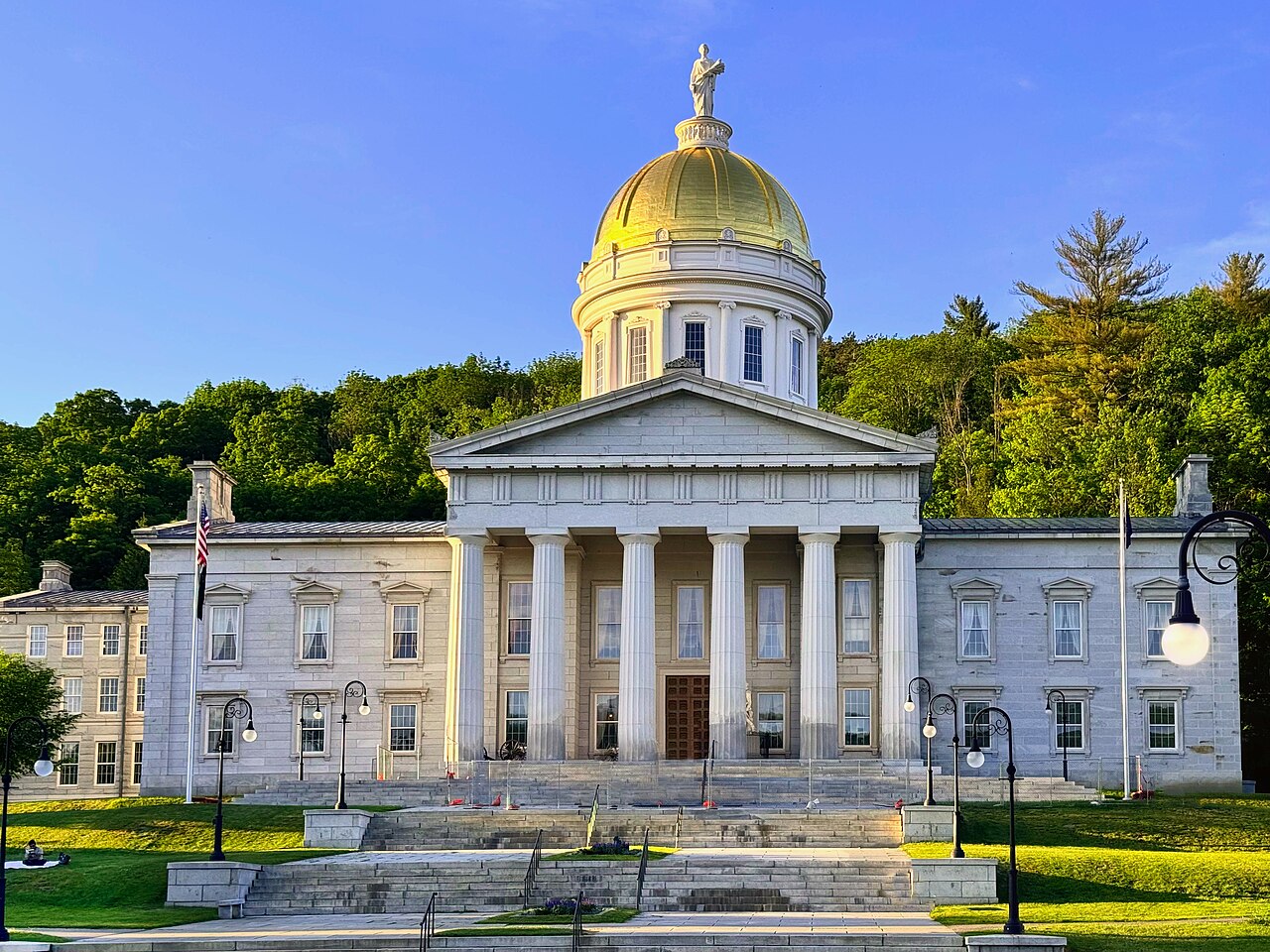
Some capitals are harder than others because the overshadowing city is not just larger, but famous in its own right. Montpelier, Vermont, is the smallest capital in the country, with about 7,800 people on the latest Census Bureau estimates, while Burlington, the state’s largest city, has about 44,000. Its French-looking spelling adds a second trap, because learners write Montpellier, the French city, with a double L. Pierre, South Dakota, is about fifteen times smaller than Sioux Falls, and its French spelling misleads the pronunciation too: it is said like the word peer, not pee-air. Frankfort, Kentucky, sits behind Louisville and Lexington, two cities whose names every American knows, and its own name invites a joke hook that actually helps: think frankfurter, and the silly word sticks.
Helena, Montana, is overshadowed by Billings, Missoula and Bozeman, and its stress pattern trips people up: it is HEL-en-uh, not hel-EE-nuh like ballerina. Augusta, Maine, has a same-name collision with Augusta, Georgia, the golf-famous city, while Portland, Maine, takes the coast and the attention. Bismarck, North Dakota, loses to Fargo in popular culture, even though it is the second city in the state. Dover, Delaware, loses twice over: Wilmington is larger at home, and Dover, England, with its white cliffs, is more famous worldwide, which matters a lot for UK learners. Each of these capitals is forgotten for a slightly different reason, which is why a single rule never fixes them all, but a set of small hooks, one per capital, does.
| Capital | Largest city in the state | Why it is forgotten |
|---|---|---|
| Montpelier, Vermont | Burlington | Smallest capital in the US |
| Pierre, South Dakota | Sioux Falls | Pronunciation trap: peer |
| Frankfort, Kentucky | Louisville | Ranks 14th in Kentucky |
| Helena, Montana | Billings | Stress trap: HEL-en-uh |
| Augusta, Maine | Portland | Same name as Augusta, Georgia |
| Olympia, Washington | Seattle | Ranks 24th in Washington |
Why Small Capitals Stay Small
It is tempting to think a capital must grow into its state’s biggest city over time, but government alone rarely builds a metropolis. Trade routes, ports, railways, universities and industries decide where people move, and those forces usually favour a different city. Juneau, Alaska, is a good example of the opposite pressure: it is the second city in Alaska, only about 140 people ahead of Fairbanks on the latest estimates, while Anchorage is far ahead of both, yet Juneau stays the capital because it was the seat of government long before Anchorage grew. Carson City, Nevada, tells the same story in the desert: Las Vegas and Reno grew on entertainment and transport, while Carson City stayed the quiet capital behind the neon. Once a capital is fixed, moving it is a political fight nobody wants, so the gap between capital and largest city can last for centuries.
That is also why old lists are dangerous. Alabama’s largest city used to be Birmingham in every textbook, but on the latest Census Bureau estimates Huntsville has overtaken it, ahead of Mobile and Birmingham, with the capital Montgomery in fourth place. Tennessee’s largest city used to be Memphis in many people’s heads, but Nashville, which is also the capital, is now larger. South Carolina’s largest city is Charleston, not the capital Columbia. If you learn from an old list, you will confidently give the wrong answer to a question the quiz is specifically designed to trap, which is why this site’s capitals tool uses the latest Census estimates and says so on the page.
How to Stop Forgetting Them
The fix is not to memorise harder, but to memorise differently. First, learn the 17 capitals that are also the largest city, such as Phoenix, Denver, Boston and Nashville. Once those are locked in, every famous city you do not recognise as one of the 17 is probably a trap, and that elimination alone answers a surprising number of questions. Second, give each hard capital one hook and only one hook: Montpelier is the smallest, Pierre is a peer, Frankfort is a frankfurter, Helena is not a ballerina, Augusta in Maine is the cold small one. Third, drill the same-name pairs as pairs, not as single facts: Charleston in West Virginia is a capital, Charleston in South Carolina is not; Columbia is the capital of South Carolina, Columbus is the capital of Ohio. Pairs stick because the contrast does the work that a lone fact cannot. Try the quiz after reading this post and see how many of the traps you dodge on the first run, then go back to the Learn cards for the ones that still catch you.
Why isn’t the biggest city usually the capital?
Capitals were usually chosen for centrality and political neutrality in the 1700s and 1800s, before the famous commercial city grew large.
What is the smallest state capital, and how small is it really?
Montpelier, Vermont, with about 7,800 people on the latest Census Bureau estimates.
Is Pierre pronounced “pee-air” or “peer”?
Peer, like the word for a dock you stand on to look across the river.
Why do people always guess Louisville for Kentucky and Sioux Falls for South Dakota?
Because Louisville and Sioux Falls are the largest, most famous cities in those states, while the capitals Frankfort and Pierre are much smaller.
Which capitals rank lowest in their own states?
Olympia ranks 24th in Washington, Jefferson City 16th in Missouri, and Frankfort 14th in Kentucky.
Ready to test yourself? Play the capitals quiz, learn the cards first, and come back here whenever a trap catches you. For the full map game, head back to the us states quiz home page and keep playing.