US State Nicknames, Mottos and Symbols
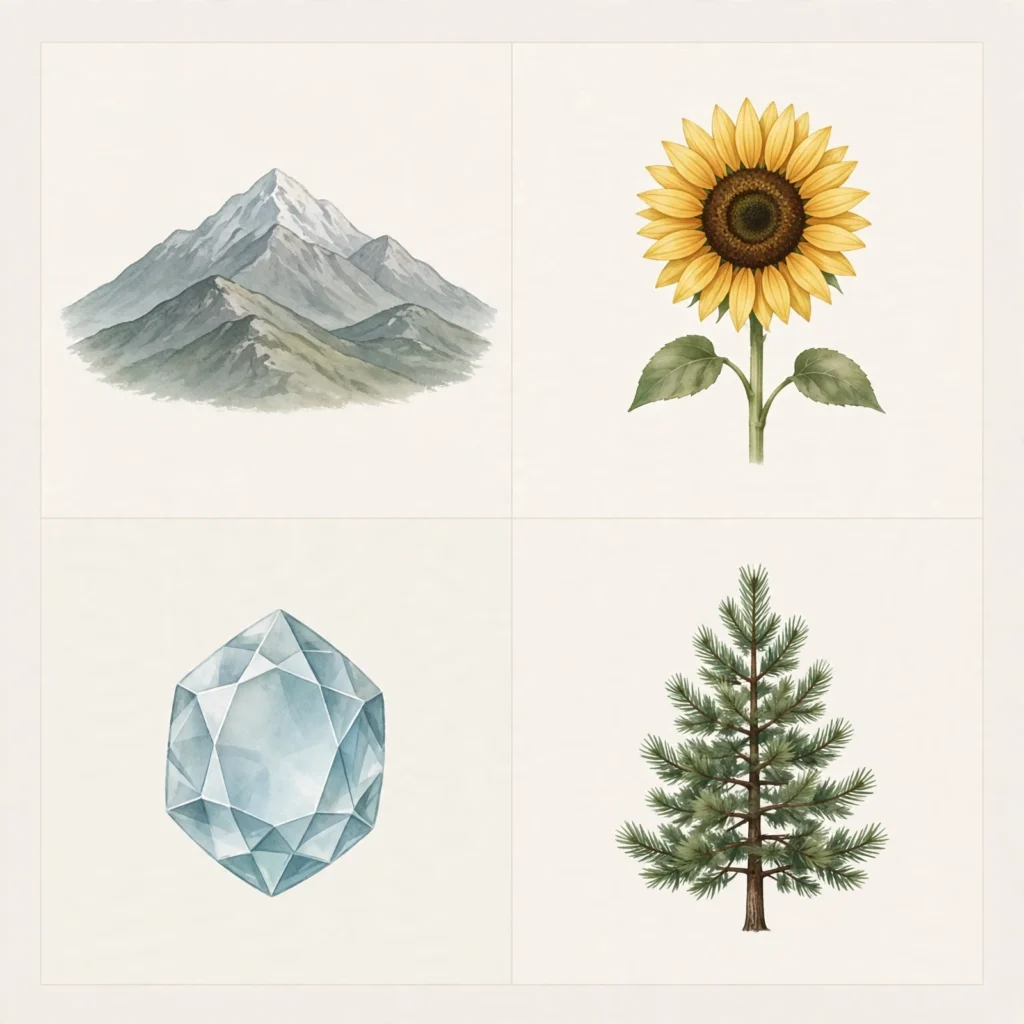
State names are easy to forget because they sound alike. North and South, West and plain, two letters swapped, and suddenly you are guessing. Nicknames work differently. A nickname is an image, not just a label. Granite is hard and gray. A sunflower is tall and yellow. A gem sparkles. When you tie a state to one vivid image, your brain has something to hold on to long after the name itself has faded.
That is why US state nicknames are such a strong study tool. They are not decoration. They are memory hooks, built into how Americans already talk about their states. This guide covers the eighteen nicknames for the tricky pairs, explains what each one means in a line or two, and shows how to turn each nickname into a hook you can use in a quiz. It also covers mottos, which work the same way, as short phrases that capture a state’s character, and it explains how symbols work as a system, not just as a list.
Learn the nickname first, and the state becomes a picture.
The Eighteen Nicknames: The Full Table
The table below is the heart of this guide. Read it once all the way through, then use it as a drill. Cover the state column, read the nickname and the meaning, and try to name the state. Then cover the nickname column and work the other way. Each entry stays short on purpose. A nickname entry is a hook, not a profile, and the hook works best when it is one image long.
| Nickname | State | What it means | Memory hook |
|---|---|---|---|
| Granite State | New Hampshire | New Hampshire is known for its granite quarries and rocky landscape. | Picture a gray granite block. Hard, plain, and northern. That is New Hampshire. |
| Green Mountain State | Vermont | Vermont takes its name from the French words for green mountains, and its Green Mountains run down the state. | Picture green mountains. Green for Vermont, and the V in Vermont for the valley shape. |
| Peace Garden State | North Dakota | North Dakota is home to the International Peace Garden, a garden shared with Canada as a symbol of peace between neighbors. | Picture a quiet garden on a northern border. Peaceful, northern, North Dakota. |
| Palmetto State | South Carolina | The palmetto palm appears on South Carolina’s flag and stands as the state’s plant symbol. | Picture a palmetto palm on a warm southern coast. Palm means South Carolina. |
| Tar Heel State | North Carolina | Tar Heel is North Carolina’s long-used nickname, tied to the state’s history of producing tar and turpentine from pine trees. | Picture sticky tar on a heel that will not budge. Tar Heel means North Carolina, the upper Carolina. |
| Old Dominion State | Virginia | Old Dominion refers to Virginia’s status as one of the oldest English colonies in America, loyal to the crown in its early history. | Picture an old, grand dominion on the Atlantic coast. Old means Virginia, the coastal Virginia. |
| Mountain State | West Virginia | West Virginia is almost entirely mountainous, sitting in the Appalachian Mountains with no coastline. | Picture mountains in every direction and no sea in sight. Mountains mean West Virginia. |
| Sunflower State | Kansas | Kansas is known for sunflowers, which grow widely across its plains. | Picture a field of tall yellow sunflowers under a plains sky. Sunflower means Kansas, the southern Plains state. |
| Cornhusker State | Nebraska | Cornhusker refers to Nebraska’s farming heritage, and to the work of husking corn by hand in earlier times. | Picture hands husking corn on the northern Plains. Corn means Nebraska, the upper Plains state. |
| Hoosier State | Indiana | Hoosier is the long-used name for a person from Indiana, even though the exact origin of the word is debated. | Picture someone proudly calling himself a Hoosier. Hoosier means Indiana, the eastern state of its pair. |
| Prairie State | Illinois | Illinois is known for its prairies, the wide, flat grasslands that once covered much of the state. | Picture endless prairie grass stretching west. Prairie means Illinois, the western state of its pair. |
| Hawkeye State | Iowa | Hawkeye is Iowa’s nickname, tied to a famous Native American leader’s name used as a state symbol in the state’s early history. | Picture a sharp-eyed hawk over Midwest farm fields. Hawkeye means Iowa, the farm state. |
| Gem State | Idaho | Idaho is known as the Gem State for its gemstones and mineral wealth. | Picture a sparkling gem in western mountains. Gem means Idaho, far west, not Iowa. |
| Treasure State | Montana | Montana is known as the Treasure State for its mineral riches, including gold, silver, and copper found in its mountains. | Picture treasure hidden in western mountains. Treasure means Montana, the western M state. |
| North Star State | Minnesota | Minnesota is known as the North Star State, after the north star on its flag and seal, pointing to its northern position. | Picture the north star over northern lakes. North Star means Minnesota, the eastern lake state. |
| Evergreen State | Washington | Washington is known as the Evergreen State for its abundant evergreen forests, which stay green all year. | Picture evergreen trees in Pacific Northwest rain. Evergreen means Washington state, not DC. |
| Natural State | Arkansas | Arkansas is known as the Natural State for its natural beauty, including forests, rivers, and hot springs. | Picture untouched natural scenery in the South. Natural means Arkansas, warm and southern. |
| Last Frontier State | Alaska | Alaska is known as the Last Frontier for its vast, wild, and remote northern landscape, settled later and less densely than other states. | Picture a wild frontier at the far north edge of the map. Frontier means Alaska, far north. |
Work through the table in pairs, because that is how the confusion happens. Granite against Green Mountain. Tar Heel against Palmetto. Old Dominion against Mountain. Sunflower against Cornhusker. Hoosier against Prairie. Hawkeye against Gem. Treasure against North Star. Evergreen against the district that has no state nickname at all. Natural against Last Frontier. In each pair, make the two images feel different. If they feel the same, make one bigger, stranger, or more specific until they cannot be swapped.
Grouping the Nicknames: Four Families
Once you know the eighteen names, group them. Groups turn a long list into a few families, and families are easier to recall under pressure.
Mountain and garden names form the first family. Green Mountain, Mountain State, and Peace Garden all describe land and what grows on it or rises from it. Vermont’s green mountains, West Virginia’s mountains, and North Dakota’s peace garden are all pictures of place. If a nickname describes a mountain or a garden, picture the land first and the state second.
Plant names form the second family. Palmetto, Sunflower, Prairie, and Evergreen are all plant pictures. South Carolina’s palm, Kansas’s sunflower, Illinois’s prairie grass, and Washington’s evergreen trees each give you a plant to picture. Plant nicknames are useful because plants are visual and specific. A palm does not look like a sunflower, and a sunflower does not look like an evergreen tree. That visual difference is the point.
Frontier and treasure names form the third family. Treasure State, Last Frontier, and Gem State all describe wealth, wildness, or discovery. Montana’s treasure, Alaska’s frontier, and Idaho’s gems are all pictures of something found or explored in the West and North. If a nickname sounds like an adventure, it probably belongs to a western or northern state.
Character and history names form the fourth family. Old Dominion, Tar Heel, Hoosier, Cornhusker, Hawkeye, Natural, Granite, and North Star describe people, work, history, or position. Virginia’s old dominion, North Carolina’s tar heel, Indiana’s hoosier, Nebraska’s cornhusker, Iowa’s hawkeye, Arkansas’s natural beauty, New Hampshire’s granite, and Minnesota’s north star each tell you something about who lived there, what they did, or where the state sits. These names take a little more thought than a plant picture, but they reward it, because they carry a story as well as an image.
Use the families as a second drill. Name a family, then list its members without looking. Mountain and garden: Green Mountain, Mountain, Peace Garden. Plant: Palmetto, Sunflower, Prairie, Evergreen. Frontier: Treasure, Last Frontier, Gem. Character and history: the rest. If you can list a family, you can find a single nickname inside it, even when you cannot recall the full table in order.
Mottos: Short Phrases That Stick
Mottos work like nicknames, but in words rather than pictures. A motto is a short phrase a state adopts to express its character, and the best ones are short enough to say in one breath. As a memory tool, a motto is a second hook to use when the picture hook fails: if the image does not come, the phrase sometimes does.
The three Northeast mottos, New Hampshire’s, Vermont’s, and Maine’s, are explained in full in the small Northeast states guide, where they belong, because they separate three states that outsiders often treat as one place. The principle to carry here is simpler: tone is faster than recall. In a timed quiz, a bold phrase, a balanced phrase, and a brief Latin phrase feel different before you have finished remembering which state each belongs to, and that difference is enough to point you to the right answer.
Symbols as a System: Why One Image Beats a Name
A name is abstract. A symbol is concrete. That difference explains why nicknames work so well as a study system. When you learn “Vermont” as a word, you store letters. When you learn “Green Mountain” as an image, you store a picture, a color, and a place. Pictures last longer than letters, and they are harder to swap, because a green mountain does not look like a granite block.
The system works in three steps. First, give each state one vivid image, its nickname. Second, make that image specific, not generic. Not just a mountain, but a green mountain. Not just a flower, but a sunflower. Not just a stone, but granite. Specificity is what stops two images from merging. Third, tie the image to the pair trick. Granite sits east and touches the sea. Green Mountain sits west and does not. Sunflower sits south on the Plains. Cornhusker sits north. The image plus the direction is a complete answer.
Shared symbols add a second layer to the system, in general terms. Some symbols repeat across states. A bird, a flower, or a tree that one state claims may also appear as another state’s symbol. That sharing is normal, and it is a useful warning: a shared symbol alone does not identify a state. What identifies a state is its nickname plus its position, its capital, and its pair trick together. Use the nickname as the entry point, then confirm with direction or another fact before you answer.
In practice, this means you should not study nicknames as an isolated list. Study each nickname with its pair partner beside it, and with one direction word attached. Granite, east, coastal. Green Mountain, west, inland. Treasure, west, mountains. North Star, east, lakes. The nickname opens the door, and the direction walks you through it.
How to Use Nicknames in Learn Mode
The Tricky Pairs Quiz Learn Mode is built around this exact idea. Each state has its own short learn quiz, and one of its questions teaches the state’s nickname. You do not just read the nickname. You answer a question about it, which forces your brain to retrieve the image rather than passively recognize it. Retrieval is what makes a hook stick.
Use Learn Mode in nickname order. Pick a pair, learn both nicknames, then take both states’ learn quizzes back to back. When you get a nickname question wrong, do not just note the right answer. Picture the image again, bigger and stranger than before, and say the pair direction aloud. Granite, east. Green Mountain, west. That extra second of picturing is what turns a corrected mistake into a lasting memory.
After Learn Mode, use nicknames as a warm-up before the duel. Name all eighteen nicknames from memory, in pair order, before you start the timed rounds. If you can name eighteen images in under a minute, your duel answers will come faster, because the image will arrive before the name has time to confuse you.

Frequently Asked Questions
What is the nickname of Vermont?
Vermont is the Green Mountain State. The name comes from the French words for green mountains, and the Green Mountains run down the state. Picture green mountains, and you have Vermont.
What is the nickname of New Hampshire, and why is it called the Granite State?
New Hampshire is the Granite State, named for its granite quarries and rocky landscape. Granite is hard, gray, and plain, which fits the state’s image and its bold motto, “Live Free or Die.” Picture a granite block, and you have New Hampshire, the eastern state of its pair, touching the Atlantic.
What are the nicknames of Montana and Minnesota?
Montana is the Treasure State, named for its mineral riches in the western mountains. Minnesota is the North Star State, named for the north star that points to its northern position among the lakes. Treasure means west and mountains. North Star means east and lakes. That contrast ends the M-state mix-up.
What are the nicknames of Arkansas and Alaska?
Arkansas is the Natural State, named for its natural beauty, forests, rivers, and hot springs. Alaska is the Last Frontier State, named for its vast, wild, and remote northern landscape. Natural means warm and southern. Last Frontier means far north and wild. Same first letters, opposite ends of the map, and the nicknames tell you which is which.
Do different states ever share the same symbol?
Yes, in general terms, some symbols repeat across states. A bird, flower, or tree claimed by one state may also be claimed by another. That is why a shared symbol alone should not be your only clue. Use the nickname together with direction, capital, and pair trick to confirm your answer, rather than relying on a single shared symbol.
How can nicknames help me in a quiz?
Nicknames give you one vivid image per state, which is easier to recall than a bare name. Picture the image, add one direction word, and answer. Granite, east. Green Mountain, west. Sunflower, south. Cornhusker, north. Image plus direction beats name alone, every time.
Turn Eighteen Images Into Eighteen Right Answers
Eighteen nicknames sound like a lot, until you group them into families and pair them off. Four families, nine pairs, one image each. Learn them in pair order, drill them in family order, and test them in Learn Mode before you duel. The image will start to arrive before the name, and that is exactly when mix-ups stop.
When you are ready to practice the nicknames under quiz conditions, try the pairs quiz to lock them in. The Tricky Pairs Quiz tests each state’s nickname as part of its learn quizzes, and the full us states quiz homepage lets you practice nicknames, capitals, and pairs across all fifty states.